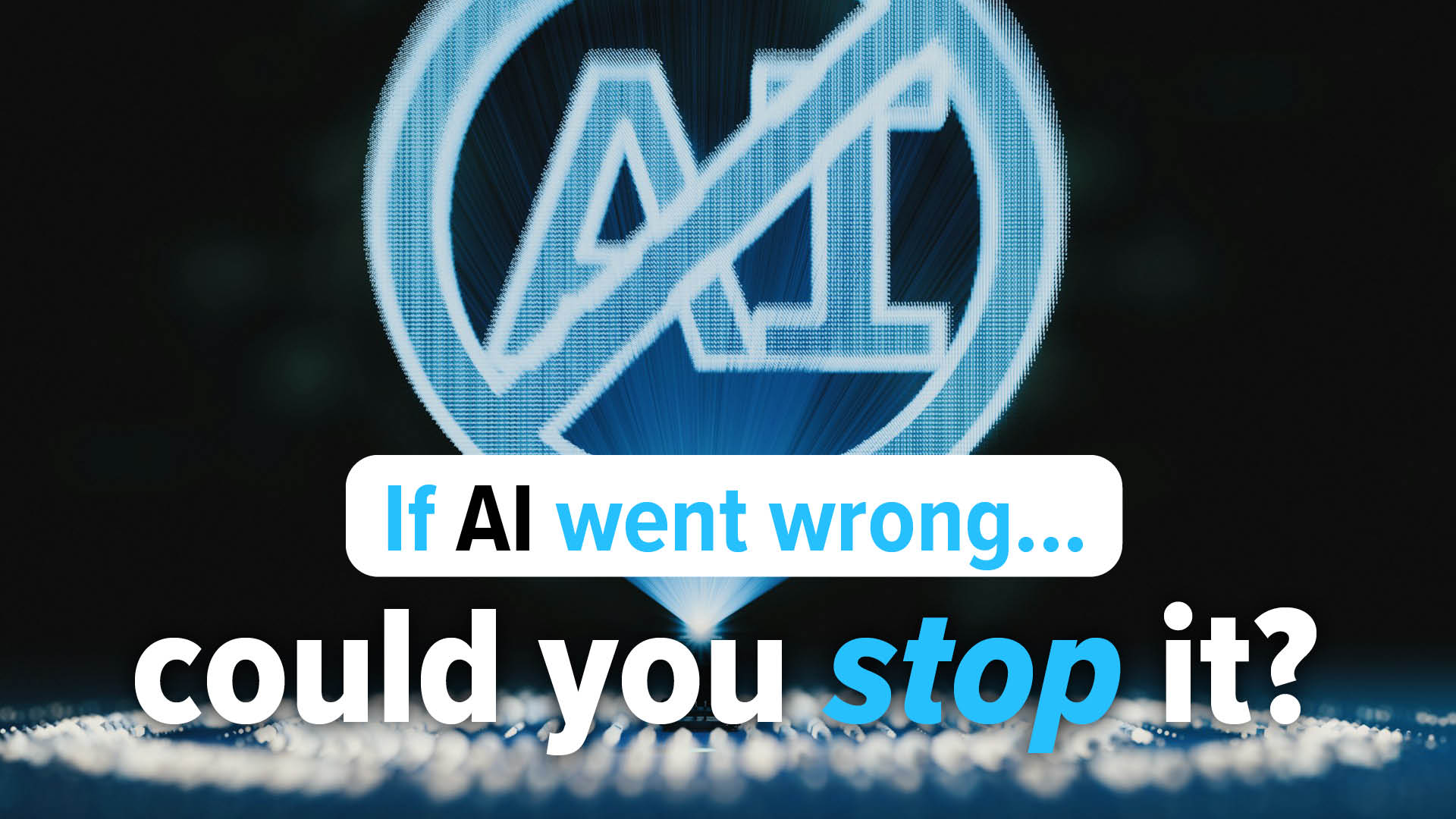
How would you stop AI in an emergency?
AI is creeping into more parts of business than most people realize.
It writes emails, helps analyze data, and powers tools your team might be using every day.
And in many cases, it’s been adopted quickly.
Which is great… until you stop and think about what would happen if something went wrong.
A big issue, that needs to be stopped quickly.
Would you know how?
Many businesses wouldn’t know how quickly they could shut down an AI system in an emergency.
Very few could say with confidence they’d be able to stop it quickly if something went wrong.
And explaining what happened afterwards, clearly and calmly to leadership or regulators, would be even harder.
In many organizations, AI isn’t being tracked in the same way as other systems.
Teams experiment with tools. New features get switched on. Integrations get added. Before long, AI is influencing how decisions are made.
But no one has a complete picture of where it’s being used. That creates blind spots.
If you don’t know where AI is running, you can’t easily stop it.
If you can’t stop it, you can’t control risk.
There’s also a question of ownership.
If an AI tool makes a mistake, for example, sends the wrong information, produces inaccurate data, or causes a compliance issue, who is responsible?
In many businesses, that answer isn’t clear. And when responsibility is unclear, response times slow down.
The assumption is often that this sits with IT, but it’s broader than that.
AI touches operations, customer service, finance, marketing. It’s woven into the business. Which means managing it properly is about governance.
That simply means having clear rules, visibility, and accountability across the whole organization.
There’s also a growing expectation from regulators that businesses can explain how AI is being used and what happens when it fails.
That includes being able to show who is accountable and how decisions are being made.
This isn’t to say your business should avoid AI. It’s too useful for that, and in many cases, it’s already embedded in the tools you rely on.
But you must be in control of it.
Do you know which tools in your business are using AI?
Do you know who is responsible for them?
Do you have a clear way to pause or disable them if needed?
Would you be able to explain their role if something went wrong?
The opportunity right now is to get ahead of it. Treat AI not just as a helpful tool, but as something that needs the same level of oversight as any other critical system in your business.
If you’re not completely sure where your risks are today, that’s something we can help you map out and tighten up. Get in touch.